
The Rise of Radiopharmaceuticals: Redefining Precision Medicine
Radiopharmaceuticals are transforming oncology and CNS care through theranostic approaches. Discover how infrastructure, logistics, and site selection define success.
What Is Radiopharma?
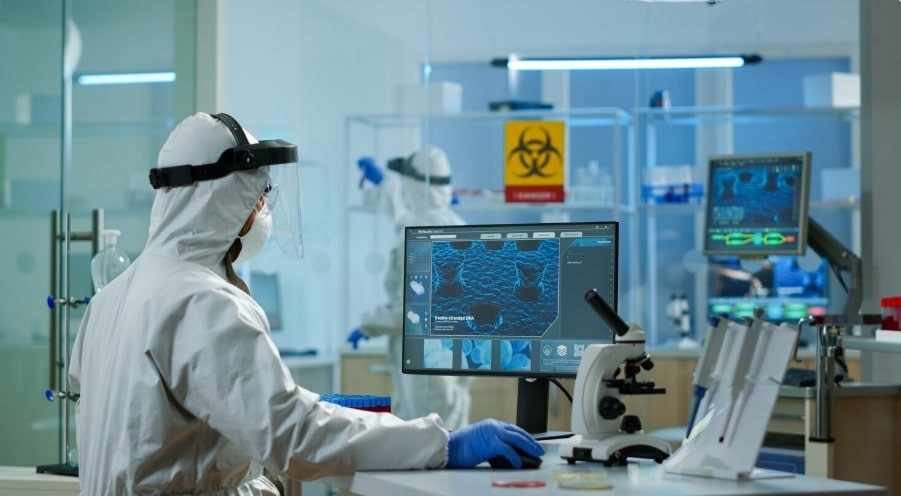
A radiopharmaceutical is a molecule composed of a radioisotope plus a targeting vector that directs that isotope to specific tissues. These agents can be used purely for diagnostics, imaging disease activity, or in theranostic applications, where the same agent diagnoses and treats disease in a single molecule.
Production typically uses nuclear reactors or medical cyclotrons, carried out under stringent Good Manufacturing Practice (GMP) guidelines. Unlike standard drugs that can be stored, many radiopharmaceuticals have half-lives measured in hours, meaning that the distance and time between production and patient use become critical constraints.
This is not speculative. Radiopharma is already entering mainstream use. PSMA-targeted agents and somatostatin receptor (SSTR) radionuclide therapies have validated the theranostics model, and Novartis' Pluvicto has expanded its approved indications while posting strong sales growth. Radiopharma is no longer the future—it is the now.
Why Radiopharma, Why Now?
The urgency we feel today is not accidental. Multiple forces are converging to push radiopharma from promise to paradigm.
Scientific breakthroughs
Theranostic agents like PSMA and SSTR show that diagnosis and treatment can live in the same molecule, opening up entirely new care pathways.
Regulatory tailwinds
Agencies such as the FDA and EMA are granting fast-track and priority reviews to radiopharma therapies, with Novartis' Pluvicto among the highest-profile examples.
Market surge
Big pharma is investing heavily in radiopharma, recognizing its potential as a targeted and faster-acting modality for oncology and CNS disorders.
Supply unlocks
New investments in cyclotron and isotope production capacity by DOE and industry players are expanding commercial-scale availability.
Patient need
Faster detection and treatment options are essential, especially in oncology where delays in trials can cost lives. Radiopharma answers this urgency.
The Half-Life Constraint
Radiopharmaceuticals are governed not by convenience but by physics itself. The moment an isotope is produced, the clock begins to tick. Unlike conventional drugs that can be stored for months or even years, radiopharmaceuticals are ephemeral by design. Isotopes like Fluorine-18, widely used in PET imaging, have a half-life of less than two hours; others, like Lutetium-177, stretch to only a few days. This razor-thin window means that production, quality control, shipment, and administration to patients must all occur in tightly orchestrated succession.
The consequence is profound. A batch manufactured in a facility hundreds of miles away may never reach its destination in usable form. A delayed handoff from production to a radiochemistry lab could cause the compound to decay before synthesis is even complete. Even the scheduling of patients becomes a critical variable; if a patient cannot be prepared at the exact moment a dose arrives, the treatment opportunity is lost forever. This is why radiopharmaceutical development cannot be divorced from infrastructure and logistics. It demands proximity to cyclotrons and nuclear reactors, the presence of GMP-certified hot labs, seamless radiation safety systems, and reliable last-mile transport.
In this world, time is not simply money; time is the science itself. Every minute determines whether a radiopharmaceutical is a life-saving treatment or a wasted opportunity.
The Infrastructure and Logistics Challenge
Radiopharmaceuticals do not behave like traditional drugs. Their development and delivery are shaped by the physics of radioactive decay, which means time is always ticking. Unlike a pill or an injectable biologic that can be shipped worldwide and stored for months, radiopharmaceuticals often have half-lives measured in mere hours. This transforms infrastructure and logistics from a supporting function into the very heart of success in radiopharma clinical trials.
At the foundation are cyclotrons and nuclear reactors, which produce the isotopes that power these therapies. Without reliable access to isotope production, even the best-designed trial cannot begin. But isotope generation is only the first step. Once created, these fragile compounds must immediately move into GMP-certified radiochemistry laboratories where they are synthesized, quality-tested, and prepared for patient use. These labs are built like fortresses—hot cells, lead shielding, and specialized handling equipment are essential to ensure safety for both staff and patients.
The challenge does not end within the laboratory. Safe storage and waste disposal must comply with radiation safety regulations, while the compounds themselves are racing against their half-life. This means trial sites need tightly integrated logistics—transport must be near-instantaneous, scheduling of patients must be precise, and every delay translates into lost doses and lost opportunity. Advanced imaging systems like PET/CT scanners, therapy equipment, and trained multidisciplinary teams must also be in place to ensure both accuracy and safety.
In radiopharma, infrastructure and logistics are not background details—they define whether a trial site is even viable. This is exactly where platforms like Kitsa can create impact—by making sites with the right blend of infrastructure, compliance, and speed visible to sponsors, reducing trial failures born out of logistical gaps.
Where Kitsa Comes In
This is where Kitsa plays a decisive role. Radiopharma site readiness is not just about infrastructure—it is about making that readiness visible to sponsors. Today, sponsors struggle to identify which hospitals can truly deliver radiopharma trials at scale. Information is fragmented, often buried within university systems or regional networks.
Kitsa brings this visibility into one platform. By aggregating and validating site-level data, Kitsa highlights which sites have PET scan facilities, proximity to cyclotrons for short half-life isotopes, GMP-certified radiochemistry labs, radiation safety systems, last-mile isotope delivery, and certified staff—all critical determinants of radiopharma trial success. Beyond existing players, Kitsa helps sponsors discover potential sites that already have the right facilities and patient populations but have not yet conducted trials. Today, Kitsa tracks more than 750 sites with radiopharma experience, an asset that becomes even more critical as demand for radiopharma trials accelerates globally. Industry analysts point to steady double-digit growth in radiopharmaceutical trials year over year, intensifying the need for sponsors to expand beyond the current set of known sites.
For clinical trial sites, being visible on Kitsa means being positioned for the next wave of high-investment radiopharma studies. For pharma companies, Kitsa removes the trial-and-error of site selection, cutting down costs, time, and risk in one stroke.
The Radiopharma Decade
Radiopharmaceuticals are no longer an experimental niche—they are becoming a core part of modern medicine. With recent blockbuster approvals, strong support from regulators, and rapid investment in isotope production capacity, radiopharma is positioned to become a mainstream pillar of oncology and central nervous system (CNS) care.
But progress in science alone will not be enough to unlock this future. The real bottlenecks lie in infrastructure, logistics, and site readiness. Cyclotron access, GMP-certified radiochemistry labs, radiation safety systems, and fast last-mile delivery all determine whether a trial can succeed. Equally important is visibility—many capable trial sites remain overlooked simply because they are not easily discoverable by sponsors.
The urgency is clear—the opportunity is historic. Those sites and sponsors that adapt quickly to the unique demands of radiopharma will not only gain a competitive edge but will also define the next decade of precision medicine. Radiopharmaceuticals represent more than innovation—they represent a chance to rewrite how humanity approaches cancer, neurological disorders, and beyond. The decade ahead belongs to radiopharma—and the systems that make it work.
Key Takeaways
Primary Keywords: Radiopharmaceuticals, Radiopharmaceutical clinical trials, Theranostics in oncology, Nuclear medicine therapies, Radiopharma site selection, Kitsa clinical trial platform
Secondary Keywords: Cyclotron production for clinical trials, Isotope supply chain management, Radiopharmaceutical logistics challenges, GMP radiochemistry labs, Radiation safety in clinical trials, Nuclear medicine infrastructure, Patient recruitment for radiopharma trials
References
- IAEA - Radiopharmaceutical Production: https://www.iaea.org/nuclear-science/isotopes/radiopharmaceutical-production
- IAEA - Half-life data / nuclide tables: https://www-nds.iaea.org/relnsd/vcharthtml/VChartHTML.html
- FDA - E6(R3) Good Clinical Practice: https://www.fda.gov/regulatory-information/search-fda-guidance-documents/e6r3-good-clinical-practice-gcp
- FDA - E6(R3) Annex 2: https://www.fda.gov/regulatory-information/search-fda-guidance-documents/e6r3-good-clinical-practice-annex-2
- EMA - Pluvicto EPAR: https://www.ema.europa.eu/en/medicines/human/EPAR/pluvicto
- FiercePharma - Pluvicto expansion: https://www.fiercepharma.com/pharma/novartis-prostate-cancer-drug-pluvicto-wins-key-fda-nod-toward-5b-plus-sales-target
- Contract Pharma - Radiopharma infrastructure: https://www.contractpharma.com/breaking-news/nucleus-radiopharma-appoints-dr-stephen-hahn-as-ceo/
- DOE Office of Science - Isotope R&D and Production: https://www.energy.gov/science/ip/isotope-rd-and-production-doe-ip
- NIDC / DOE Isotope Program: https://www.isotopes.gov/
- Nature Reviews Drug Discovery - Radiopharmaceutical therapy in cancer: https://www.nature.com/articles/s41573-020-0073-9
- Financial Times - Eli Lilly actinium-225 supply: https://www.ft.com/content/c560f664-ad97-4e7a-87b0-6a25b3e35e57
- Financial Times - Sanofi-OranoMed: https://www.ft.com/content/7987aa5d-461f-4773-8455-4e021e3357dd
- Kitsa Blog - The Hidden Geography of Alzheimer's: https://kitsa.com/blogs/the-hidden-geography-of-alzheimers-data-driven-insights-for-clinical-trial-site-selection
Related Posts
GLP-1 Changed Obesity Treatment. The Next Challenge May Be Clinical Trial Capacity
Over the past few years, very few drug classes have reshaped both medicine and the pharmaceutical industry as dramatically as GLP-1 receptor agonists. Originally developed for type 2 diabetes, drugs like semaglutide and tirzepatide have now become central to modern weight management.
Read More →
4 AI Misconceptions in Clinical Trials That Are Easy to Miss, but Costly to Ignore
AI is already influencing clinical trial design, but misconceptions delay its use until protocols are finalized, when preventable risk is already locked in.
Read More →
11 Early-Phase Trials to Watch Now to Reduce Clinical Trial Design Risk
Early-phase trials now define clinical trial design risk. See where protocol complexity, eligibility pressure, and execution challenges are forming before later phases lock them in.
Read More →