
How to Reduce Patient Screening Failures by 80% Using Clinical Trial Management Software: A Step-by-Step Guide
Reduce screening failures, accelerate patient recruitment, and add $1–4M revenue using Kitsa's AI-powered clinical trial management software.

Are failed patient screenings draining your site's resources, and delaying trial completion?
Patient screening failures are one of the biggest challenges facing clinical trials, which cost them money, time, and human resources. According to the National Library of Medicine, research report, certain therapeutic areas, such as genitourinary cancer trials, see screening failure rates around 20–30%, while early-stage Alzheimer's disease trials exceed 85%.
With AI-powered clinical trial management software, your site can dramatically reduce screening failures, accelerate patient recruitment, and maximize revenue. In this step-by-step guide, we'll walk you through how to streamline screening workflows, select the right software, implement AI-driven tools effectively, and turn your site's patient recruitment into a faster, more reliable process.
High patient screening failures waste time, money, and delay trials. AI-powered clinical trial management software can reduce failures, speed up patient recruitment, and boost revenue. This guide shows easy steps to streamline screening and find eligible patients faster.
Step-by-Step Guide to Reducing Screening Failures with Clinical Trial Management Software
Learn how AI-powered clinical trial management software helps your site cut screening failures, speed patient enrollment, and improve trial efficiency in simple, actionable steps.
Step 1: Begin With Understanding the Impact of Your Manual Patient Screening
Before you can improve patient recruitment, it's essential to understand where the current process falls short. Manual screening is slow, prone to errors, and costly. For example:
- CRCs (Clinical Research Coordinators) often screen 100–200 records only to recruit 5 patients.
- The total process can take 5–10 weeks, delaying trial start.
- Each failed screening may cost around $1,200, not including lost revenue opportunities.
Actionable Steps for Your Site:
- Map out the existing screening workflow and track failure rates.
- Identify bottlenecks where human error or incomplete data causes delays.
- Highlight areas where AI could reduce effort and improve accuracy.
Why It Matters:
Understanding these challenges lays the foundation for reducing failure rates and improving clinical trial patient enrolment. By identifying pain points early, your site can implement targeted solutions, save time, and make data-driven decisions to enhance trial efficiency, empowering clinical trial sites in the process.

Step 2: Exploring the Next Generation Patient Screening Tools for Clinical Trials
For years, clinical trial sites have struggled with manual patient screening. Going through spreadsheets, scanned files, and fragmented records is slow, prone to mistakes, and often misses patients who could qualify. Next-generation pre-screening tools, like Kitsa, are changing this by using AI to quickly spot the right patients, making the process faster and more accurate.
Actionable Steps:
- Take a close look at your current screening process to see where it slows down or makes mistakes.
- Check out AI-powered platforms that can handle both structured data (like lab results and EHRs) and unstructured data (like physician notes and reports).
- Try a pilot project to see how these tools help surface eligible patients faster.
- Use the insights to improve your workflow and make recruitment decisions more confidently.
Why It Matters:
Switching to AI-driven, next-generation clinical trial tools reduces missed opportunities, speeds up enrollment, and makes patient recruitment more reliable. It turns a time-consuming, error-prone process into a smarter, proactive approach.

Step 3: Choosing the Right Patient Pre-Screening Tools
Now that you've explored smarter patient screening options, it's time to choose a clinical trial management software that works for your site. The goal is to make patient recruitment faster, reduce errors, and keep trials running smoothly without overwhelming your team. A thoughtful choice here lays the foundation for more efficient and reliable operations.
Key Features to Look For:
- AI-powered patient matching across structured and unstructured data.
- Secure integration with existing EHRs and other systems.
- Transparent, explainable recommendations to support confident decision-making.
- Scalable deployment across multiple trial sites without performance drops.
Why It Matters:
Selecting the right clinical trial management software ensures your site can run patient recruitment more efficiently and accurately. It helps your team find eligible participants faster, reduces errors, and keeps trials on schedule. With the right clinical trial software solution, your site is better prepared to handle multiple trials smoothly, improving overall enrollment outcomes.
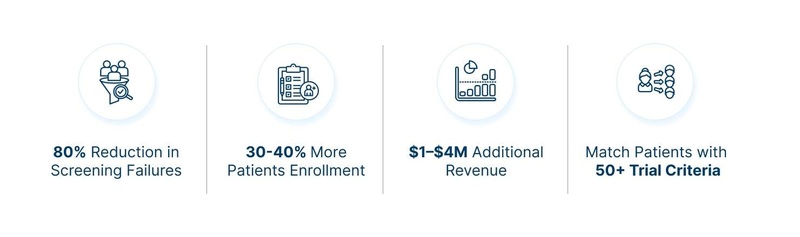
Benefits of AI Powered Clinical Trial Management Software
Step 4: Implementing Clinical Trial Management Software Effectively
Once you've selected the right clinical trial management software, it's time to get it up and running. Implementation should feel smooth, not overwhelming. Platforms like Kitsa make this process easier with one-click setup, seamless EHR integration, and explainable AI that helps teams trust every screening decision.
Clinical Research Philadelphia runs about 15 trials each year. Using AI tools like Kitsa, the team quickly identified eligible patients and enrolled participants who might have been missed. Just three extra patients per trial delivered multi-million-dollar revenue gains.
Actionable Implementation Steps:
Integrate Your Systems Securely
Connect your EHRs, lab results, and trial databases to the platform.
Define Screening Rules Clearly
Upload your trial's inclusion and exclusion criteria.
Train Your Team Efficiently
Run short sessions for coordinators and investigators to understand workflows.
Monitor and Optimize in Real Time
Track patient matching, screening outcomes, and referral activity through live dashboards.
Scale Across Trials
Once your first study is running smoothly, extend the setup to additional trials.
Enable Secure Referrals
Streamline patient referrals between sites without risking privacy.
Why It Matters:
Proper implementation empowers the trial sites to turn it into a strategic recruitment tool. Sites can identify eligible patients faster, enhance trial diversity, and minimize missed opportunities. AI-driven solutions like Kitsa streamline screening and referrals, while also enabling sponsors to select trial sites more effectively and ensure recruitment runs smoothly.
Pro Tips: Dos and Don'ts
Dos:
- Implement comprehensive pre-screening protocols
- Leverage AI for efficient patient matching
- Monitor and analyze screen failure data
Don'ts:
- Don't skip technology for pre-screening tests
- Avoid manual pre-screening with paper or spreadsheets
- Ensure all EHRs and lab records are accurate and up to date to maintain AI effectiveness.
Key Takeaways
AI-powered clinical trial management software like Kitsa helps sites cut screening failures by 80%, ensure faster clinical trial patient recruitment, and improve trial outcomes. By uncovering hidden candidates, streamlining referrals, and ensuring compliance, AI saves time and boosts revenue.
Next Steps: Put AI-Powered Clinical Trial Solutions to Work
- Spot delays, errors, and missed patient matches in your current workflow.
- Select an AI-driven solution to speed up recruitment and improve accuracy.
- Track results, refine processes, and improve screening performance continuously.
- Book a personalized trial assessment to see the impact on your site.
CTA:
Explore how Kitsa's AI-powered platform can help your site reduce screening failures, increase patient enrollment, and maximize revenue.
FAQs
Q1: What is AI-driven patient matching in clinical trial management software?+
AI-driven patient matching uses advanced algorithms to quickly identify eligible patients for clinical trials, improving accuracy, reducing screening failures, and speeding up patient enrollment.
Q2: How can AI improve patient screening in clinical trials?+
AI improves patient screening by analyzing large volumes of structured and unstructured data, including EHRs, lab results, and physician notes. Using AI-powered clinical trial solutions, sites can quickly identify eligible patients, minimize screening failures, and accelerate patient recruitment, improving overall trial efficiency.
Q3: Is AI in clinical trials compliant with regulatory standards?+
Yes. Leading AI-powered clinical trial solutions comply with HIPAA (Health Insurance Portability & Accountability Act), GDPR (General Data Protection regulation), and 21 CFR (Code of Federal Regulations) Part 11, ensuring patient data privacy, secure access, and regulatory adherence. This allows sites to implement AI-driven screening confidently while maintaining compliance during patient recruitment and trial management.
Q4: Can clinical trial management software integrate with EHR systems?+
Many clinical trial management platforms offer EHR integration to automate patient screening and improve recruitment, but not all handle structured and unstructured data effectively. Kitsa for example provides seamless AI-powered EHR integration, securely pulling lab results, physician notes, and other patient data to reduce errors, speed patient matching, and make trial enrollment more reliable.
Related Posts

7 Questions to Ask Before Choosing an AI Patient Screening Solution for Clinical Trial Recruitment
Explore 7 key questions every trial site should ask before choosing an AI-powered clinical trial recruitment software for faster, accurate enrollment.
Read More →
When Manual Screening Fails: How a Clinical Trial Software Saved an Oncology Study from Collapse
Clinical trial software that turns screening setbacks into enrollment success.
Read More →
The Hidden Cost of Manual Screening in Clinical Trial Services and How to Solve It
Why slow, error-prone screening processes are putting clinical trial services at risk, and how clinical trial software can fix it
Read More →