
7 Questions to Ask Before Choosing an AI Patient Screening Solution for Clinical Trial Recruitment
Explore 7 key questions every trial site should ask before choosing an AI-powered clinical trial recruitment software for faster, accurate enrollment.

Before investing in AI recruitment software, ask these 7 questions to save months of screening time and avoid costly delays.
The success of modern clinical trial recruitment largely depends on how fast they can identify and enroll the right patients for each trial. Yet most trial sites still rely on slow, manual screening processes that lead to 80% screening failures, weeks of recruitment delays, and lost revenue opportunities.
Site coordinators dig through fragmented EHRs (Electronic Health Records), spreadsheets, and scanned files, often reviewing the same records repeatedly. Each missed eligibility flag means another delay and lost participant. No wonder sites lose up to 30% of potential candidates, slowing overall clinical trial recruitment.
Successful recruitment for each clinical trial could be $50,000 per patient per site. The success or failure could mean a few million dollars of gain or loss in the topline of the trial sites.
AI-powered patient screening tools are changing the game by analyzing vast patient data in real time to identify eligible participants faster and more accurately. They automate eligibility checks, unify fragmented data, and identify qualified patients in minutes rather than weeks. But not all clinical trial solutions are created equal. Asking the right questions before selecting a platform, can save your team time, reduce errors, and set your site up for smarter, faster growth.
Here's a quick overview of the 7 essential questions every trial site should consider while assessing an AI-powered clinical trial recruitment software:

Site coordinators dig through fragmented EHRs (Electronic Health Records), spreadsheets, and scanned files, often reviewing the same records repeatedly. Each missed eligibility flag means another delay and lost participant. No wonder sites lose up to 30% of potential candidates, slowing overall clinical trial recruitment.
Successful recruitment for each clinical trial could be $50,000 per patient per site. The success or failure could mean a few million dollars of gain or loss in the topline of the trial sites.
AI-powered patient screening tools are changing the game by analyzing vast patient data in real time to identify eligible participants faster and more accurately. They automate eligibility checks, unify fragmented data, and identify qualified patients in minutes rather than weeks. But not all clinical trial solutions are created equal. Asking the right questions before selecting a platform, can save your team time, reduce errors, and set your site up for smarter, faster growth.
Here's a quick overview of the 7 essential questions every trial site should consider while assessing an AI-powered clinical trial recruitment software:
- How Accurate is the AI Patient Matching?
- Can It Integrate With Existing Clinical Trial Management Software?
- How Transparent is AI Decision-Making?
- What Data Sources Does It Use?
- Does It Offer Real-Time Updates?
- How Scalable is the Solution?
- What Support and Training Are Provided?
Now, let's dive deeper!
1. How Accurate is the AI Patient Matching?
It is important to measure how precisely the AI-driven solutions identify eligible patients from existing data sources.
Why does it matter?
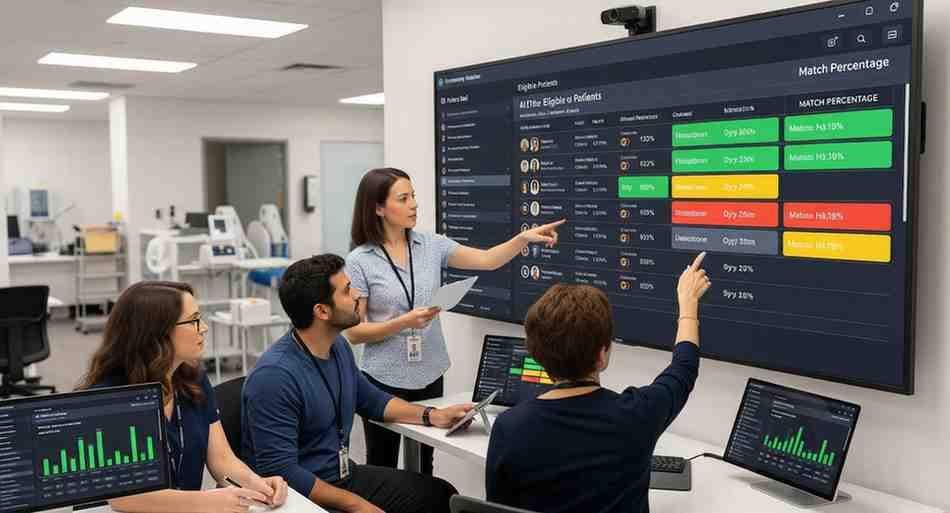
Accurate patient matching drastically reduces screening failures, speeds up clinical trial patient enrollment, saving weeks of manual work. AI evaluates 50+ criteria, including medications, vitals, and visit histories, often finding patients that manual screening misses.
Recruiting each patient for a clinical trial is worth around $50,000 per site, which means that good or bad recruitment can make a multi-million-dollar difference for trial sites.
Real World Example:
Clinical Research Philadelphia conducts 15 trials each year. By adding just a few extra patients per trial, the site unlocked multi-million-dollar revenue potential. Kitsa simplifies patient matching with AI that reviews over 50 factors like vitals, medications, and doctor notes, and analyzes both structured and unstructured health data to quickly identify eligible patients.
Clinical Research Philadelphia conducts 15 trials each year. By adding just a few extra patients per trial, the site unlocked multi-million-dollar revenue potential. Kitsa simplifies patient matching with AI that reviews over 50 factors like vitals, medications, and doctor notes, and analyzes both structured and unstructured health data to quickly identify eligible patients.
Pro Tip:
Regularly review AI-identified patient matches against historical enrollment data to ensure accuracy. You can also review what percentage of your recruits ends up being part of the trial and how that is impacting your revenue. This helps fine-tune the algorithm, reduces screening failures, and maximizes clinical trial patient enrollment.
2. Can It Integrate With Existing Clinical Trial Management Software?
It is important for the AI-driven Trial Management Software to connect seamlessly with your clinical trial management system (CTMS), Electronic Health Records (EHRs), and other existing systems so that it gets a complete view of the patient's health data. This helps in getting the holistic view and identify the right patient matches for the trial.
Why does it matter?
Integration eliminates data silos, reduces manual entry, and improves workflow efficiency. An AI solution that integrates with both EHRs and other existing clinical systems provides secure, compliant access to structured and unstructured patient data, minimizing operational disruption while improving the speed and accuracy of clinical trial recruitment.
Real World Example:
Bass Medical Group, in Alameda County, California, has 400+ providers, and has patient data spread across different systems in unstructured formats like PDFs, making access slow and error-prone. Kitsa enabled secure, compliant sharing across sites, speeding up screening and improving patient enrollment.
Bass Medical Group, in Alameda County, California, has 400+ providers, and has patient data spread across different systems in unstructured formats like PDFs, making access slow and error-prone. Kitsa enabled secure, compliant sharing across sites, speeding up screening and improving patient enrollment.
Pro Tip:
Choose an AI platform that supports seamless integration with multiple systems, including EHRs and legacy CTMS. Make sure that the platform is able to transform non-structured data, such as patient visit summaries, into structured data to capture important hidden insights. This ensures patient data flows smoothly between platforms, reduces manual entry errors, and lets your team focus on faster clinical trial recruitment instead of administrative work.
3. How Explainable and Traceable is AI Decision-Making?
It is important for the AI platform to clearly show how and why each patient was selected or excluded. Every match should be traceable to key data points like vitals, lab results, or visit notes to ensure full transparency and compliance.
Why does it matter?
Transparency builds confidence among coordinators, investigators, and regulators, ensuring every recruitment step is ethical and compliant. Explainable AI allows teams to trace and review patient selection decisions, helping confirm that no key eligibility criteria are missed. It also shows which data points, like vitals, medications, or doctor visit notes, contributed to each match. This level of traceability helps verify accuracy, minimize bias, and makes regulatory audits faster and more reliable.
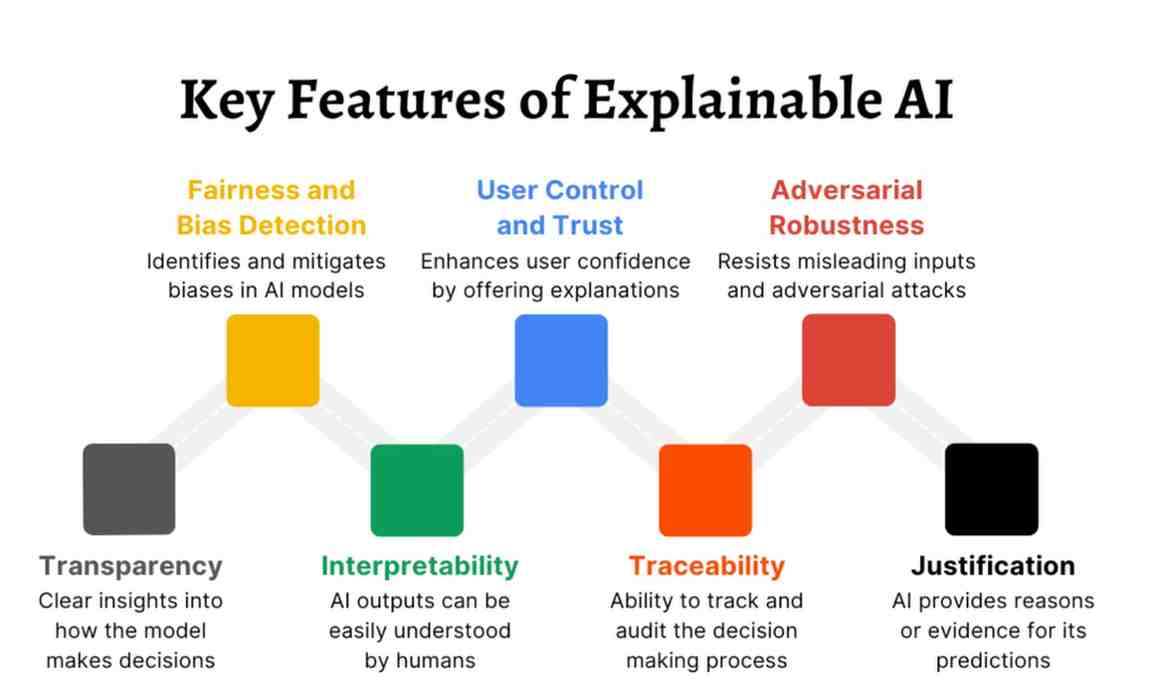
Image Source: DataScienceDojo
Real World Example:
At a mid-sized North Carolina research site, coordinators once struggled to explain patient selection during audits. After adopting an AI screening system with traceability, they could show the exact data, lab results, visit notes, medications behind each decision. This cut sponsor queries by 60% and halved verification time.
With AI-powered traceability, a North Carolina research team could instantly show lab results and notes behind each patient decision, cutting sponsor queries by 60% and audit time in half.
Pro Tip:
Look for platforms that provide detailed reasoning for each patient match. Features such as lab results, patient vitals, medications, and doctor visit summaries can help your team review decisions more confidently and accurately. Solutions like Kitsa offer this level of insight, giving sites a practical example of explainable AI in action and the confidence to enhance clinical trial recruitment and patient selection.
4. What Data Sources Does It Use?
It is important for the AI platform to analyze diverse data sources, EHRs, lab results, physician notes, and scanned records, to capture a full clinical picture. Accessing both structured and unstructured data improves accuracy, reduces screening failures, and speeds up patient recruitment
Why does it matter?
Comprehensive data inclusion improves eligibility predictions and minimizes screening failures. Platforms limited to structured data risk missing qualified patients and slowing recruitment. For instance, unstructured data such as physician notes, pathology reports, and imaging summaries often contain critical eligibility details not captured in standard EHR fields. Including these ensures a complete view of each patient's profile and prevents missed clinical trial recruitment opportunities.
Real World Example:
At a mid-sized oncology clinic in Madison, the site coordinator struggled to enroll enough patients for a hematology trial because key eligibility details were buried in scanned pathology reports and doctor notes, data their system initially ignored. After including these unstructured records, the team identified 12 additional eligible patients and reduced enrollment time by two weeks.
In Madison, a research team struggled to meet enrollment goals for a hematology trial until they began analyzing scanned reports and physician notes. The change uncovered 12 new eligible patients and shortened enrollment by two weeks.
Pro Tip:
Make sure the platform you select can read both structured and unstructured data, such as legacy EHRs, scanned documents, and physician notes. AI-driven platforms such as Kitsa are built to interpret these diverse sources, helping uncover hidden patient eligibility insights that might otherwise be missed.
Breast Cancer Screening For Clinical Trial Recruitment Using AI
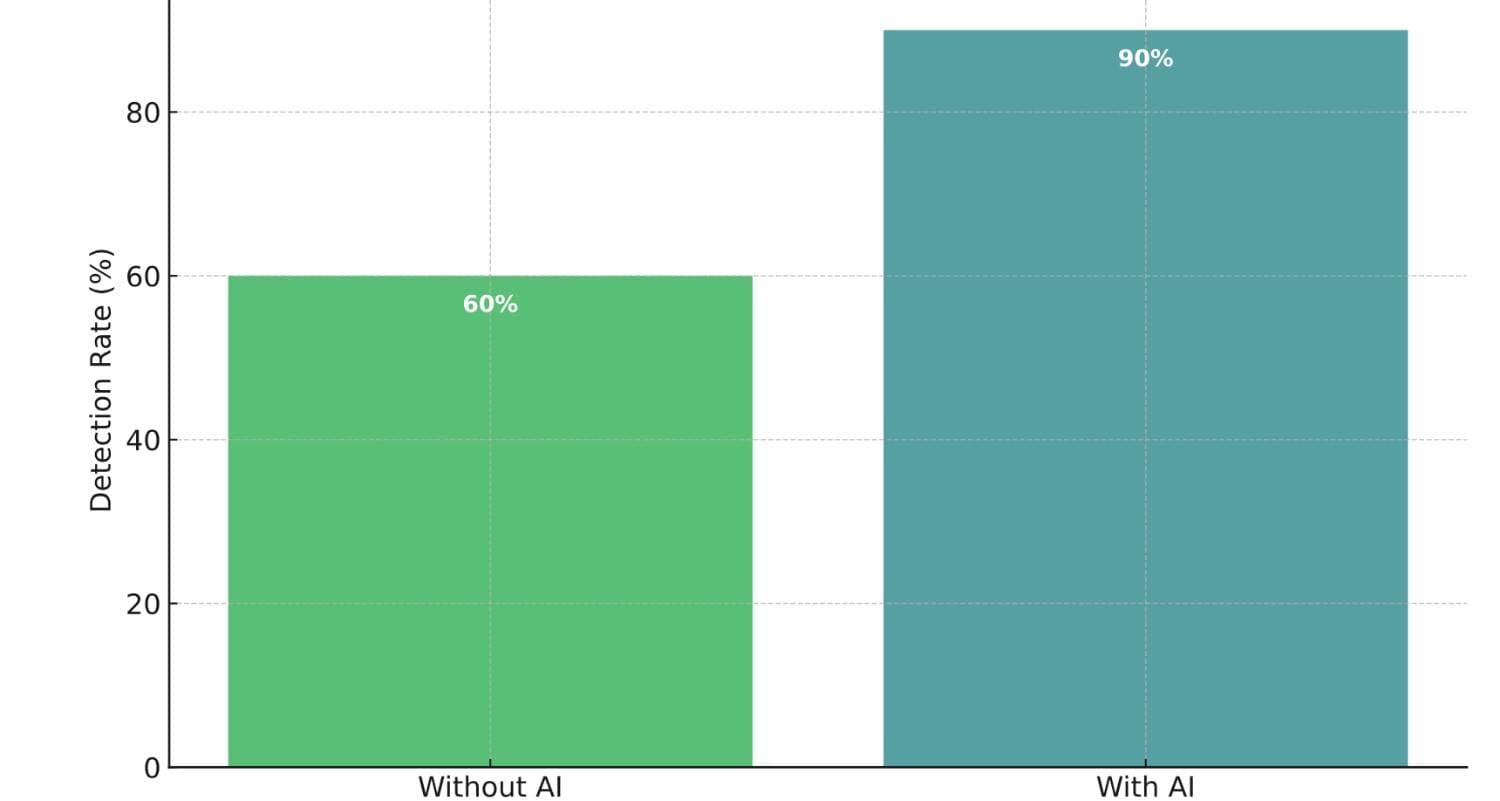
Image source: FastDataScience
5. Does It Offer Real-Time Updates?
It is important for the AI platform to provide real-time updates, ensuring the most current patient data which includes new lab results, diagnoses, or medication changes, is reflected instantly. Without real-time syncing, sites risk acting on outdated data, which can cause missed enrollment windows or duplicate screening efforts.
Why does it matter?
When updates aren't real-time, even a short delay can mean missing eligible patients or spending hours re-verifying records that have already changed. Real-time visibility enables coordinators to respond as soon as a patient becomes eligible, keeping trials on track and improving collaboration with sponsors.
Real World Example:
During a vaccine trial, a research team noticed that patient eligibility was often determined using lab values that were already 24 hours old. By the time the data was updated, several candidates no longer met inclusion criteria. After switching to a platform like Kitsa, with real-time integration, the team could act within minutes of lab results being posted, driving faster clinical trial recruitment, and a 30% rise in eligible enrollments.
In a vaccine trial, delayed lab updates caused missed enrollments as data was 24 hours old. After adopting a real-time platform like Kitsa, the team acted within minutes of new results, boosting eligible enrollments by nearly 30%.
Pro Tip:
Choose a platform that integrates seamlessly with your EHR (Electronic Health Record) and lab systems, ensuring patient data updates in real time. This not only reduces enrollment lag but also builds confidence with Pharma partners through faster, data-driven decisions.
6. How Scalable is the Solution?
It is important for an AI platform to handle growing trial volumes, larger patient datasets, and multiple research sites without compromising speed or accuracy.
Why does it matter?
A scalable solution ensures consistent results for multi-site trials and larger patient populations, supporting diverse and geographically distributed participants. It keeps patient enrollment effective even as trials grow in complexity.
Real World Example:
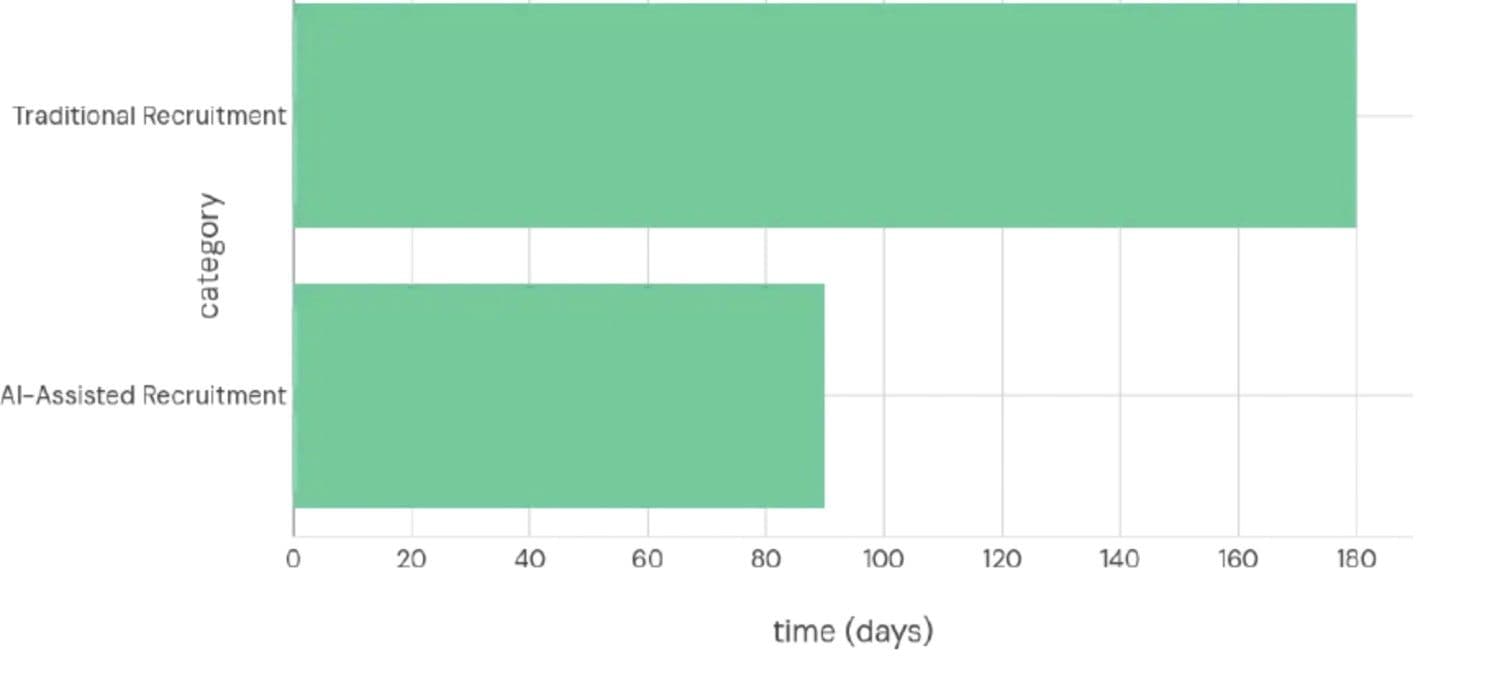
When a multi-site research network doubled its active trials, its legacy system began lagging, screening times nearly tripled. After adopting an AI-driven platform like Kitsa, built to scale across multiple sites, the team processed twice the patient volume with consistent speed and accuracy, keeping all clinical trial recruitment on schedule.
A multi-site research network saw screening times triple when trial volumes doubled. After moving to a scalable AI platform, they processed twice the patient load while keeping every trial on schedule.
Pro Tip:
Request performance data from vendors under peak workloads. Speed and accuracy should remain consistent regardless of trial volume or site expansion, ensuring smooth clinical trial recruitment at scale.
7. What Support and Training Are Provided?
It is essential for AI trial platforms to provide structured onboarding, intuitive training, and continuous support tailored to each role, from site coordinators to data managers. This ensures every team member understands how to interpret AI insights, manage workflows, and make confident eligibility decisions.
Why does it matter?
Even the best AI is only effective if your team can use it efficiently. Comprehensive support reduces errors, accelerates adoption, and ensures clinical trial recruitment targets are met. Training helps (Clinical Research Coordinators) CRCs and coordinators leverage AI insights fully, maximizing patient enrollment and site revenue.
Real World Example:
A clinical research site in Ohio faced repeated delays during trial startup because new coordinators struggled to interpret AI-generated eligibility scores. After implementing a structured onboarding program with guided walkthroughs and live Q&A (Questions & Answers) support, the site cut onboarding time by 40% and saw smoother trial execution from day one.
At a research site in Ohio, new coordinators struggled to interpret AI-generated eligibility scores, delaying trial startup. After introducing guided onboarding and live Q&A (Questions & Answers) support, the team quickly gained confidence using the platform. Onboarding time dropped by 40%, and trials began running smoothly from day one.
Pro Tip:
Choose an AI platform that's easy to adopt and backed by real-time support. Coordinators and research staff should be able to learn the system quickly, interpret AI insights confidently, and focus on what matters most, identifying and enrolling qualified patients faster.
Key Takeaway
Cut screening failures by 80%, boost clinical trial recruitment, and increase site revenue by up to $4M annually. AI platforms like Kitsa power trial sites through an integrated marketplace that keeps budgets in check and makes patient enrollment easier. With features like automated eligibility checks across 50+ criteria and seamless EHR integration, Kitsa helps teams screen patients faster, shorten trial timelines, and improve data accuracy.
TL;DR
- ›Manual screening is slow, error-prone, and can lose up to 30%-40% of patients.
- ›Cut screening failures by up to 80% with Kitsa eligibility checks, automating 50+ criteria.
- ›Real-time updates and explainable AI ensure accurate, transparent patient selection.
- ›Handles structured and unstructured patient data for comprehensive analysis.
- ›Quick setup, seamless integration, secure referrals, and scalable solutions speed multi-site recruitment.
- ›AI tools like Kitsa's clinical trial management software boost patient enrollment by 30–40% and enable $1M–$4M in extra revenue.
Key Benefits of AI for Patient Screening and Trial Success
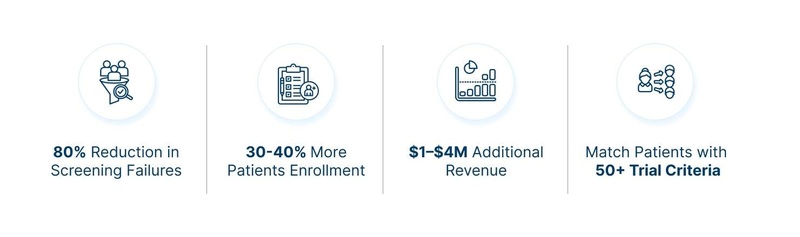
AI-powered patient screening transforms clinical trial recruitment by reducing errors, speeding enrollment, and improving patient selection. Platforms like Kitsa help trial sites stay on budget, work more efficiently, and maximize recruitment outcomes.
See how Kitsa helps trial sites recruit faster and reduce screening failures by up to 80%.
FAQs
Q1. How can AI improve patient recruitment in clinical trials?+
AI streamlines pre-screening by analyzing both structured and unstructured patient data, accurately identifying eligible participants. This reduces manual errors, shortens enrollment timelines, and increases overall efficiency, helping sites meet clinical trial recruitment targets faster.
Q2. Is it safe to share patient data across multiple trial sites?+
Yes, as long as you are using the right clinical trial recruitment tool. Platforms like Kitsa use controlled-access permissions and comply with HIPAA and other regulatory standards, ensuring patient data remains secure while enabling cross-site collaboration for faster recruitment.
Q3. How quickly can we start using Kitsa?+
Most trial sites can be set up in just a few hours with one-click integration, no coding or IT configuration required, allowing your team to start improving clinical trial recruitment immediately.
Q4. Will Kitsa work with our existing EHR and clinical trial management software?+
Yes. Kitsa integrates seamlessly with most EHRs and clinical trial management software, eliminating data silos, reducing manual entry, and enabling smoother workflows for faster and more accurate patient recruitment.
Related Posts

How to Reduce Patient Screening Failures by 80% Using Clinical Trial Management Software: A Step-by-Step Guide
Reduce screening failures, accelerate patient recruitment, and add $1–4M revenue using Kitsa's AI-powered clinical trial management software.
Read More →
When Manual Screening Fails: How a Clinical Trial Software Saved an Oncology Study from Collapse
Clinical trial software that turns screening setbacks into enrollment success.
Read More →
The Hidden Cost of Manual Screening in Clinical Trial Services and How to Solve It
Why slow, error-prone screening processes are putting clinical trial services at risk, and how clinical trial software can fix it
Read More →