
Stop Costly Trial Amendments Before They Happen: How AI Helps Clinical Trial Protocol Development Catch Risks Early
Protocol amendments are costing biopharma teams millions and months. Discover how AI-supported clinical trial protocol development catches structural risks early — before they become expensive delays.
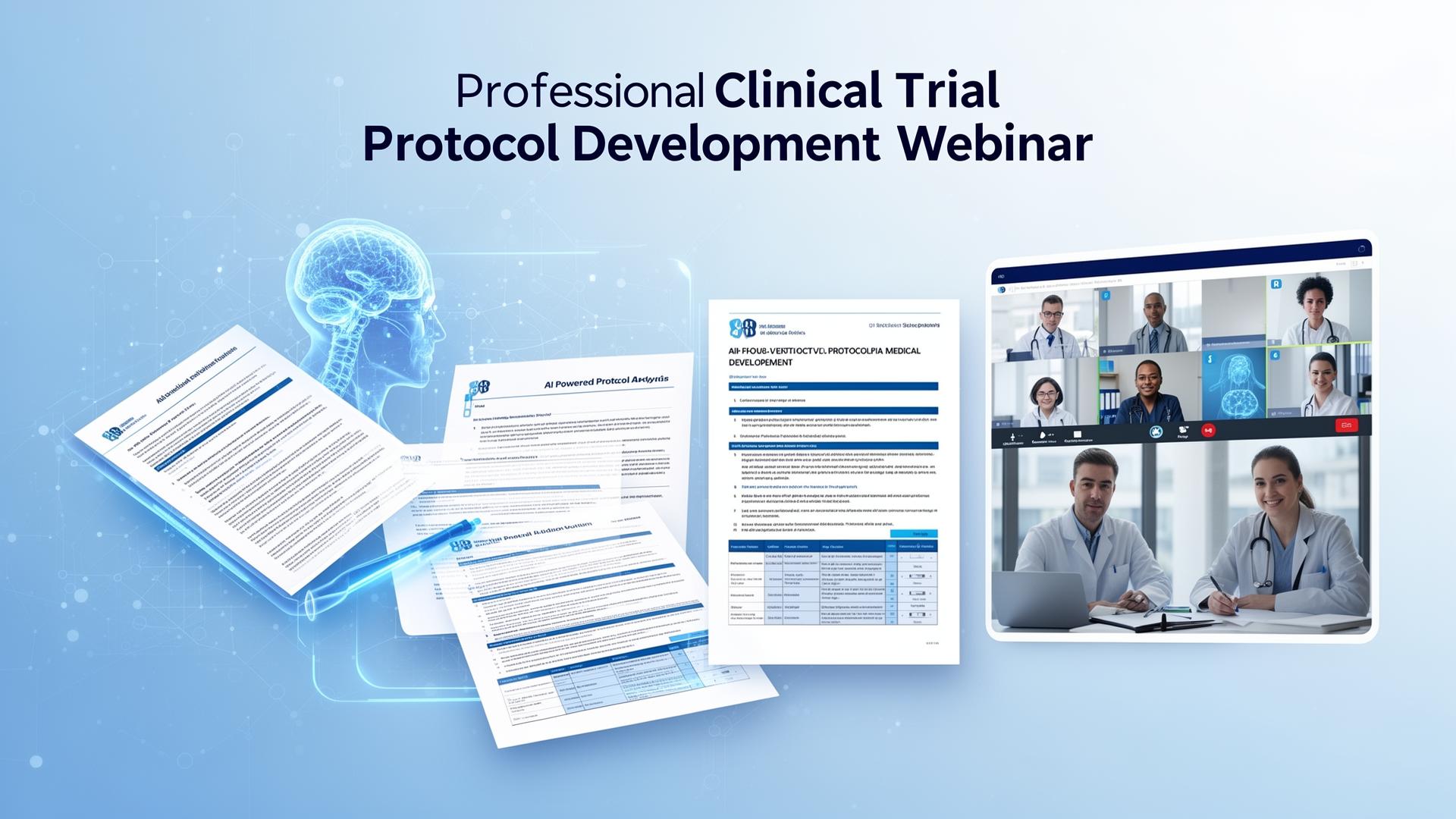
What if the biggest risks slowing your clinical trial were already inside the protocol before the study even begins?
Across biopharma and life sciences teams, delays caused by amendments continue to push milestones out, strain budgets, and jeopardize competitive timelines. And these delays often originate not from sites, not from patients, but from early decisions made during clinical trial protocol development.
"Nearly all protocols require amendments. I haven't seen a protocol that didn't need changes."
— Franziska Stemmler, CEO, Hemex AG
Despite deep scientific expertise, the manual, fragmented, document-heavy process still used for clinical trial protocol development makes early risks hard to detect. Traditional clinical trial protocol writing depends on static documents and disconnected inputs. Today, AI-supported approaches — secure, structured, and built for clinical rigor — offer a way to surface those issues much earlier, long before they turn into costly protocol amendments. Increasingly, teams are moving away from manual drafting cycles toward protocols in hours by relying on secure, agentic design environments.
Why Clinical Trial Protocol Development Still Breaks Down
Even well-designed protocols encounter problems because the development process itself works against early alignment.
Before diving into solutions, it is essential to understand why issues appear late in the lifecycle of clinical trial protocol development and how gaps in clinical trial protocol writing accumulate.
The core challenge is disconnected, manual workflows. Teams across clinical operations, biostatistics, regulatory affairs, and data management often work in silos, making inconsistencies inevitable.

Key contributors include:
1. Siloed processes
- Protocol drafts scattered across Word files, emails, PDFs, and SharePoint folders
- Misaligned endpoints and objectives introduced during clinical trial protocol development
- Outdated comparator or eligibility assumptions
2. Manual clinical trial protocol writing
- Heavy reliance on manual research into prior trials, FDA precedents, and safety data
- High risk of missing critical contextual information
- Time-consuming coordination across reviewers
These challenges often cascade into downstream operational gaps, including the hidden cost of manual screening, where late protocol changes complicate site execution and patient identification.
3. Long development timelines (often 9–12 months)
- Assumptions made early in clinical trial protocol development become outdated before final approval
- Feasibility or therapeutic landscapes shift midway
- Regulatory context changes while drafts remain static
4. Hidden flaws leading to amendments
- Eligibility criteria that narrow the feasible population
- Endpoints misaligned with historical regulatory expectations
- Assessment schedules that sites cannot realistically execute
These issues compound, turning small inconsistencies in clinical trial protocol development into major operational delays, often surfacing only after sites are activated or recruitment begins.
The Cost of Inefficiencies in Clinical Trial Protocol Writing
Delays in protocol development have downstream consequences that multiply across operations, finances, and scientific outcomes.
The financial impact tied to protocol design process is significant:
$1M+
total cost per protocol (development plus amendments)
3.5
amendments per trial on average
$100M+
losses when flawed protocols lead to study failure
$1M–$8M
per day lost when drug launches are delayed
These figures underline why improving early decision-making in clinical trial protocol development is critical. Too often, promising sites remain underutilized due to design assumptions, a dynamic explored in the recognition gap across U.S. clinical trial networks.
How AI Clinical Documentation Helps Detect Problems Earlier
AI does not replace expert reasoning — it amplifies it. With structured insight and contextual analysis, AI clinical documentation helps teams identify conceptual, regulatory, and scientific risks earlier in the drafting process.
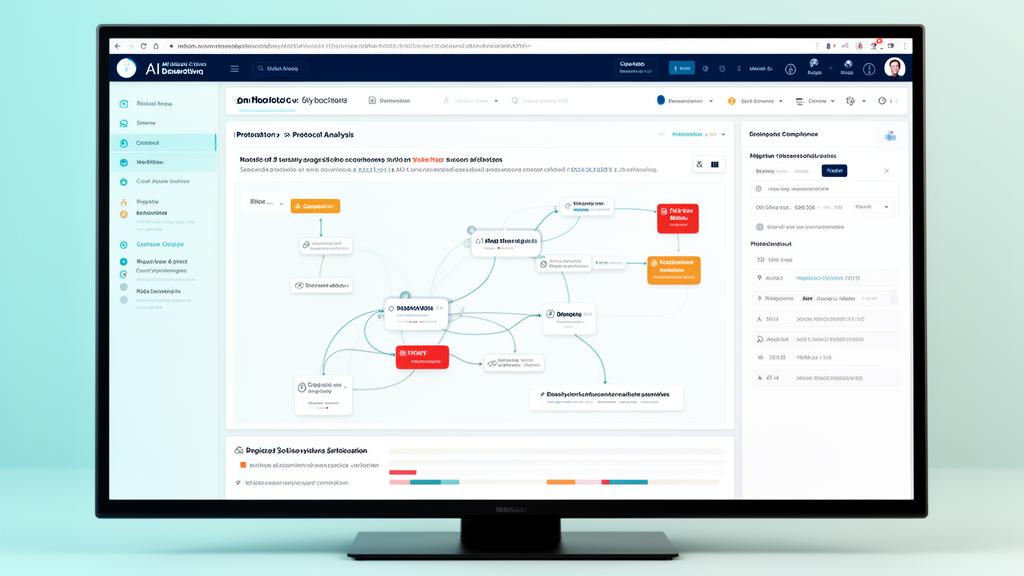
Where AI clinical documentation provides value:
1. Early detection of conceptual and structural risks
- Flags inconsistencies between endpoints, objectives, and assessments
- Detects logic gaps that could impact feasibility or interpretation
2. Instant access to contextual research
- FDA precedents and historical agency feedback
- Comparator trial designs and therapeutic benchmarks
3. Secure and compliant workflows
- Proprietary data remains protected
- Teams control which sources inform protocol decisions
- Reduced exposure to hallucinations from generic AI tools
4. Improved cross-functional alignment
- Traceable workflows reduce version fatigue
- Updates propagate consistently across sections
- Clinical, regulatory, and biostat teams stay aligned
From the perspective of CTOs building agentic AI systems for life sciences, clinical trial protocol development is fundamentally a reasoning problem, not a document-generation task. The value of AI lies in helping teams evaluate "what-if" scenarios and uncover hidden dependencies, a shift aligned with how AI is transforming clinical trials more broadly.
Modern platforms like Kitsa support this quietly by connecting logic, evidence, and documentation without overriding human expertise.
Real Example: AI Catches a High-Risk Endpoint Decision in Minutes
A clinical team developing a Phase III oncology trial proposed two co-primary endpoints:
- ORR (overall response rate)
- PFS (progression-free survival)
When the protocol section was reviewed using AI-supported analysis during clinical trial protocol development, several concerns surfaced immediately.

What was flagged:
- Growing regulatory preference for a single primary endpoint
- Historical skepticism toward investigator-assessed ORR
- Precedents where similar endpoint strategies faced regulatory pushback
- Potential downstream impact on approval timelines
Outcome:
- The endpoint strategy was revisited early
- A likely amendment was avoided
- Regulatory alignment was strengthened before first patient in
This illustrates how structured reasoning supports clinical trial protocol development by surfacing risks that are easy to miss during manual protocol development documentation.
Where AI Platforms Fit Into Modern Clinical Trial Protocol Development
AI platforms are not designed to "auto-write" a protocol (including agentic AI platforms). Instead, they support the rigor and speed required for modern clinical trial protocol development by strengthening how decisions are evaluated and documented.
How these platforms help without replacing expertise:
- Accelerated early drafting by synthesizing literature and benchmarks
- Section-level analytical reasoning across endpoints, statistics, and feasibility
- Human-in-the-loop workflows with full traceability
Many organizations now layer this capability into environments that also support powering clinical trial sites through integrated feasibility, selection, and activation workflows, often leveraging unique market network & AgenticAI models to reduce fragmentation.
The Future of Clinical Trial Protocol Writing in Biopharma
As protocols grow more complex — with adaptive designs, biomarker strategies, and global feasibility constraints — the margin for error continues to shrink.
Integrating AI clinical documentation into clinical trial protocol development improves:
- Risk reduction by identifying issues before amendments are required
- Regulatory alignment through context-aware decision support
- Feasibility clarity around patient populations and operational burden
- Collaboration efficiency with auditable, consistent workflows
- Speed to market through stronger first-draft protocols
The future of clinical trial protocol writing is not automation — it is augmentation.

AI provides the visibility, structure, and research depth teams need to design protocols that work the first time. In this evolving landscape, platforms such as Kitsa reflect where biopharma is heading — tools that strengthen reasoning, protect proprietary data, and help teams align earlier in the clinical trial protocol development process, without replacing scientific judgment.
FAQs
Why do issues in clinical trial protocol development surface late?+
Clinical trial protocol development often relies on fragmented reviews and static documents, allowing inconsistencies between design assumptions, endpoints, and feasibility to remain hidden until execution begins.
How does AI help improve early protocol design decisions?+
AI analyzes relationships across objectives, endpoints, eligibility criteria, and assessments during drafting, helping teams identify risks and misalignment before protocols are finalized.
Does AI replace expert-led clinical protocol authoring?+
No. AI augments expert reasoning by providing structured analysis, historical context, and traceable insights, while scientific and regulatory decisions remain human-led.
How do AI platforms support clinical trial protocol development without replacing teams?+
AI platforms support clinical trial protocol development by analyzing design logic, regulatory context, and historical evidence in one environment. Platforms such as Kitsa help teams surface risks, test assumptions, and document decisions early, while experts retain full control over scientific judgment.
About KScribe Clinical Studio
KScribe Clinical Studio is Kitsa's AI-powered platform for clinical trial document development. It supports protocol writing, feasibility assessment, and site selection with integrated intelligence, helping teams move faster with greater confidence.
Related Posts

How AI is Transforming Clinical Trials: Revolutionizing Healthcare with Kitsa
AI is revolutionizing clinical trials from patient recruitment to data analysis. Discover how Kitsa helps sites streamline trial participation.
Read More →
4 AI Misconceptions in Clinical Trials That Are Easy to Miss, but Costly to Ignore
AI is already influencing clinical trial design, but misconceptions delay its use until protocols are finalized, when preventable risk is already locked in.
Read More →
11 Early-Phase Trials to Watch Now to Reduce Clinical Trial Design Risk
Early-phase trials now define clinical trial design risk. See where protocol complexity, eligibility pressure, and execution challenges are forming before later phases lock them in.
Read More →